Hello, and welcome to my review of Brownstone Research.
Brownstone Research is a well-known investment research publisher led by Jeff Brown, with a heavy focus on technology trends and tech-focused stock ideas.
If you’ve seen their ads online, you’ve probably noticed that they make bold claims and offer more than one service, which can make it harder to figure out what you’re actually getting.
That’s why Brownstone can be confusing to evaluate. The flagship service is the Near Future Report, but there are several other services too. So whether it’s worth it depends on which service you’re considering and what kind of investor you are.
In this review, I’ll cover the 5 key things to know before subscribing, including what Brownstone is, what you get as a subscriber, and whether it’s legit and worth it.
I’ll also share the alternative I recommend most often if you prefer a more selective approach built around a smaller number of high-quality ideas you can follow with confidence over time.
See My Top Recommendation5 Things to Know Before Joining Brownstone Research
I’ve reviewed hundreds of stock-picking services over the years, and one thing is clear: small differences in approach can lead to very different experiences for subscribers.
That matters here because Brownstone Research is a publisher with multiple editors and services, so what you’re really evaluating is the specific offer you’re about to buy.
Below are the 5 things to know before joining, so you can decide quickly whether it fits what you’re looking for.
(1) What Is Brownstone Research?
Brownstone Research is an investment research publisher led by Jeff Brown that focuses on technology-driven trends and the public companies tied to those trends.
At a high level, Brownstone’s core message is that we’re in a period of rapid technological change (AI, robotics, clean energy, biotech, space, digital assets), and that the biggest opportunities come from spotting these shifts early and positioning in the companies that could benefit as they play out.
Jeff Brown is the face of the brand, and Brownstone presents him as a longtime tech-focused analyst and investor with industry experience and a history of calling major trends early. The research is built around his big-picture view of where technology is going and how to invest around it.
In practice, most people mean the Near Future Report when they say “Brownstone Research,” but the company also offers multiple services across different themes and price points.
That matters because the subscriber experience often isn’t just “one idea.” It can turn into a steady flow of new themes, updates, and decisions. This is great if you want lots of exposure, but less ideal if you prefer a more selective approach with fewer moving parts.
(2) What Do You Get (and What Does It Cost)?
What you get depends on which Brownstone product you’re looking at, but Brownstone’s flagship service is called the Near Future Report. This is an entry-level service that gives you a monthly newsletter, model portfolio, position updates, and the occasional special report.
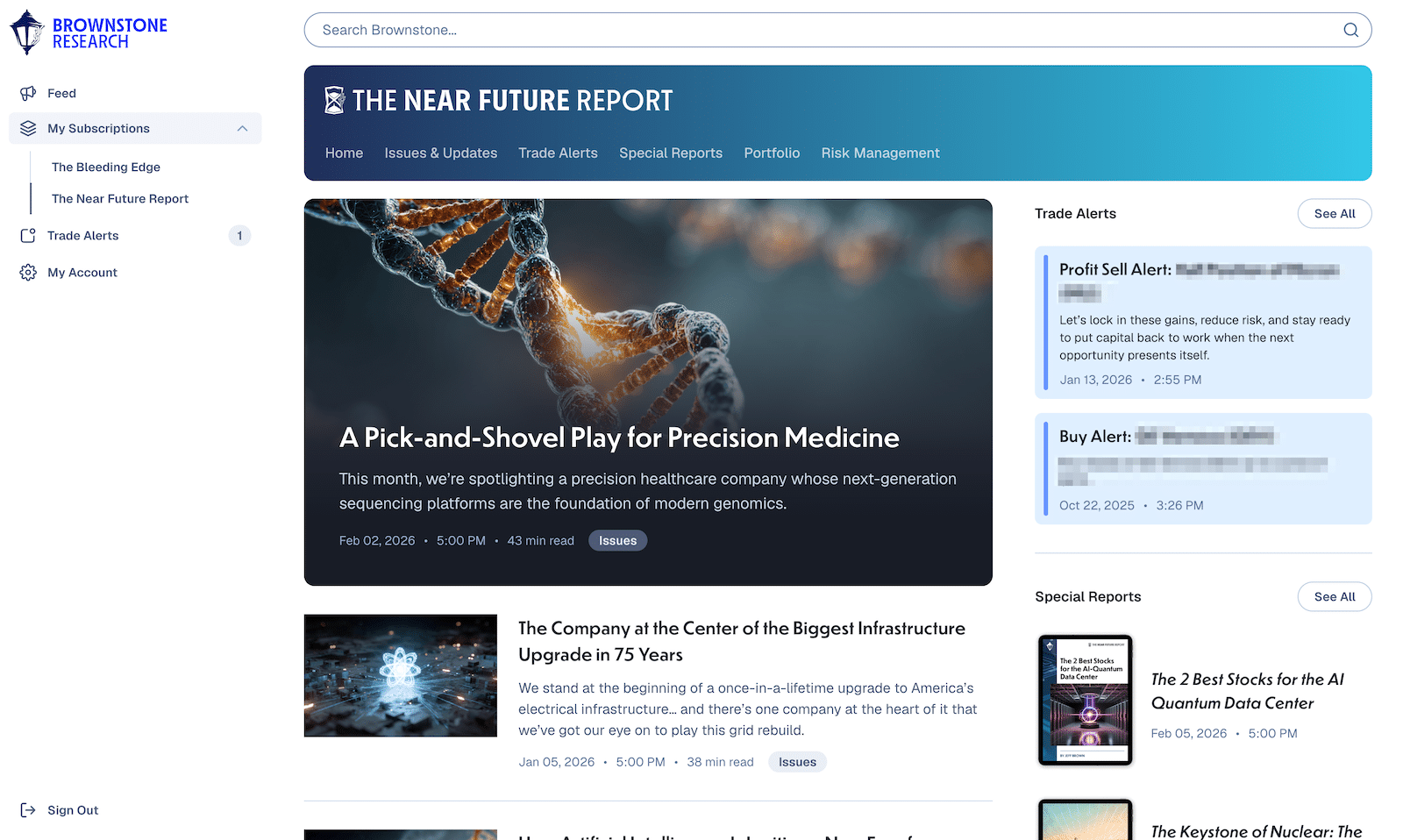
As for cost, the retail price for the Near Future Report is typically around $499 per year, although promotional pricing can reduce the first-year cost. You will also need some investment capital to follow Jeff Brown’s ideas, and Brownstone recommends around $10,000.
After you join, it’s common to see upsells into other Brownstone services, many of which are priced in the ~$5,000 per year range. Examples include Exponential Tech Investor, Early Stage Trader, Permissionless Investor, Neural Net Profits, and Deep Access. These are optional, but they expand the research into additional tech themes and strategies.
On refunds, the key thing to know is that terms can vary by service. Some services include a money-back window, while others may offer refund credits instead of cash refunds. Because policies differ depending on the checkout page, it’s worth reviewing the specific terms before subscribing.
(3) Is Brownstone Research Legit and Worth It?
Brownstone Research is a legitimate investment research publisher, and Jeff Brown is a real analyst with a long-running presence in the financial newsletter space.
That said, just because it’s legit doesn’t mean it’s the right fit for everyone. Online feedback is mixed, and the Trustpilot score for Brownstone Research is on the low side:
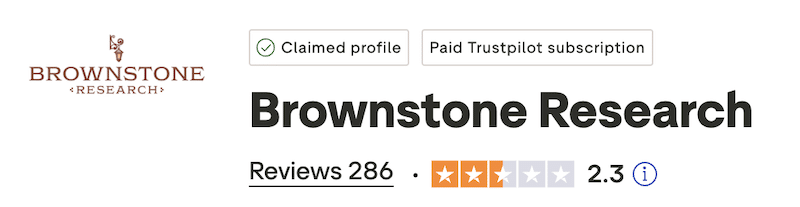
A low rating doesn’t automatically mean “scam,” but it does suggest a meaningful number of subscribers were unhappy, often for reasons like billing, customer service, or expectations not matching what they thought they were buying.
The biggest “expectations gap” is how Brownstone is marketed versus how it feels to follow as a subscriber. The promotions often spotlight a few big breakthrough ideas, but in practice, you’re usually following a model portfolio with a larger set of positions and ongoing updates.
For example, when I joined the Near Future Report, it showed over two dozen positions across five model portfolios. That can be a plus if you want broad exposure to fast-moving tech themes, but it also means more to track, more decisions, and results that depend on the overall basket of picks.
So whether it’s worth it comes down to fit. If you like big tech themes, want a steady flow of new ideas, and don’t mind monitoring a portfolio process over time, Brownstone can make sense.
However, if you prefer a more selective approach built around fewer ideas and fewer moving parts, it may not align with what you expected.
(4) Who Is Brownstone Research Best For?
Brownstone Research’s marketing appeals to investors who want to capitalize on emerging tech trends and aim for outsized gains from innovation-driven stocks. It often spotlights a small number of breakthrough ideas, but in practice, the flagship service is better suited to investors who want broad exposure to a basket of tech stocks.
It’s also a better fit if you want a steady flow of new ideas and updates tied to multiple portfolios and a larger set of positions to track over time.
On the other hand, Brownstone may not be ideal if what you really want is a more selective approach built around a smaller number of high-quality ideas you can follow without constantly monitoring updates. In that case, there may be better options to consider.
(5) Is There a Better Alternative?
I’ve reviewed hundreds of investment newsletters over the years, and while many are built around big themes and bold predictions, only a small number take a more selective approach to uncovering exceptional opportunities before the crowd catches on.
One analyst whose work has stood the test of time is Mark Skousen.
Skousen is a veteran economist, bestselling author, and former CIA analyst who has spent decades in elite financial circles.
Over the past four decades, he has built a long-standing reputation for spotting major trends and investment opportunities before they become widely recognized.
Right now, Skousen is focused on a little-known SpaceX play that he believes could be like investing in Tesla in the early days, and he just released a new presentation showing how ordinary investors can get positioned early, before the broader market catches on.
Click here to watch the full presentation now (free ticker revealed):