Hello, and welcome to my review of the Near Future Report.
The Near Future Report is run by Jeff Brown, a well-known stock picker who focuses on identifying companies poised to benefit from major tech shifts in areas like AI, robotics, and semiconductors.
He’s known for releasing promotional presentations that emphasize the upside potential of his stock ideas and the broader tech trends behind them.
According to the company, Brownstone Research, the goal of the Near Future Report is to help subscribers get the stability of well-established companies while still getting the growth potential that comes from owning high-growth stocks.
To understand how the service approaches that goal, I’ll walk through the six key things to know before joining Near Future Report — what the service focuses on, how it’s structured, and who it’s best suited for.
I’ll also share my number one recommendation, a service with a long track record of identifying under-the-radar opportunities early.
See My Top Recommendation6 Things to Know Before Joining Jeff Brown’s Near Future Report
I’ve reviewed hundreds of stock-picking services over the years, and one thing has become clear: not all investment newsletters are built the same, and small differences in approach can lead to very different experiences for subscribers.
Understanding how a service is positioned, what it emphasizes, and who it’s designed for can help you decide whether it aligns with your own investing goals and expectations.
(1) What Is the Near Future Report?
The Near Future Report is a subscription-based stock research service published by Brownstone Research and edited by Jeff Brown. It focuses mostly on tech and innovation-driven themes, with new stock ideas published regularly in the newsletter and ongoing updates in between.
Holding periods vary, but many recommendations are intended to be held for several years rather than traded quickly.
Here’s what the members’ area looks like:
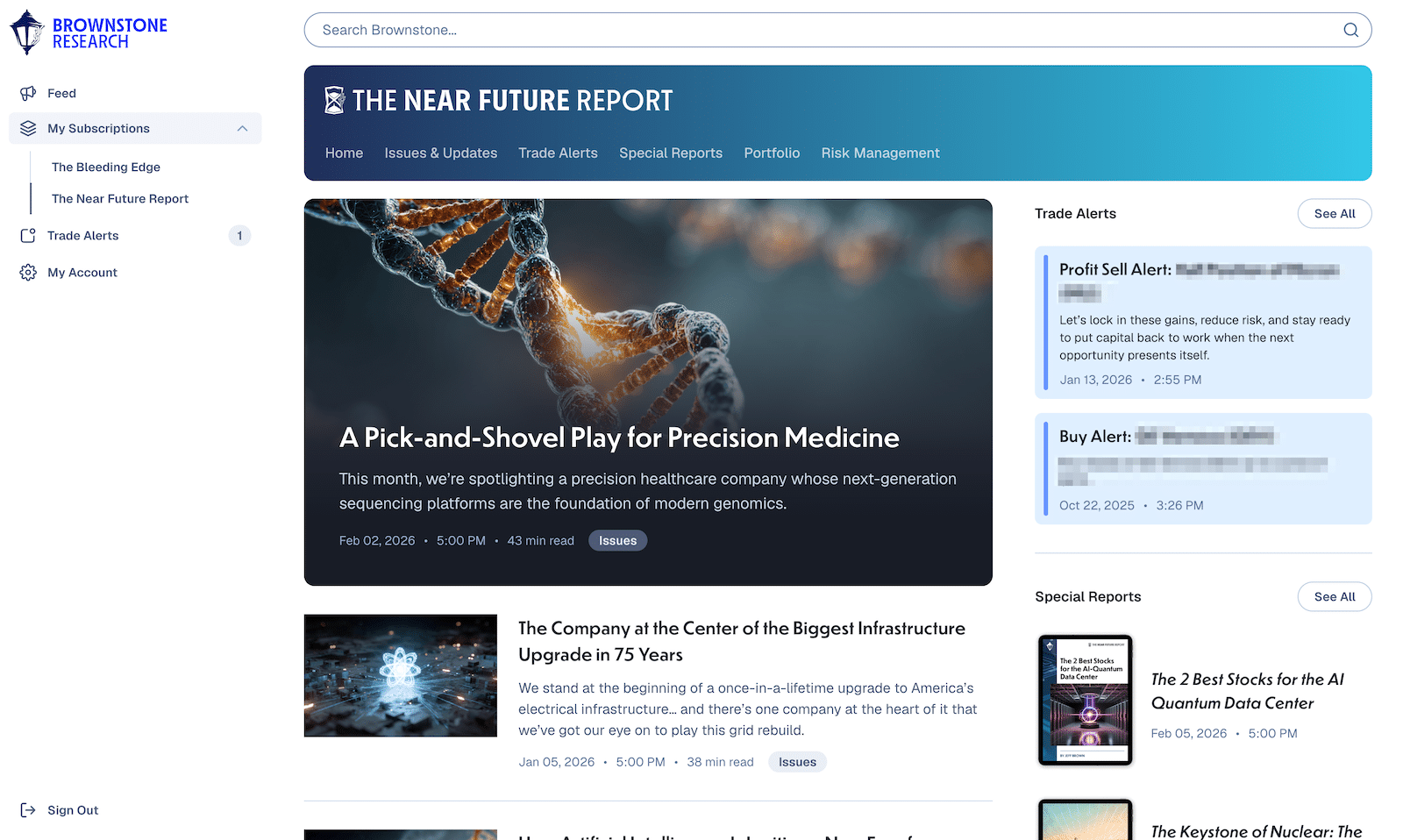
Here’s what you’re essentially getting as a member:
- Monthly newsletter issues, where new ideas and themes are introduced.
- Issues & updates in between, whenever Jeff and his team find new opportunities or want to update members on the market and their latest findings.
- Model portfolios, where you can see the active recommendations and get important updates that might affect positions, including alerts when they recommend trimming or closing a position.
- Occasional research reports (special write-ups) when they see a “unique opportunity” that doesn’t fit the regular schedule.
- Members-only site, where you can review issues/reports and view the model portfolio.
In a nutshell, the members’ area is clean and easy to navigate, and it makes it straightforward to see what’s currently recommended, the thesis behind each position, and any updates or alerts as the service evolves.
(2) Who Is Jeff Brown?
Jeff Brown is the founder and CEO of Brownstone Research, and he publishes the Near Future Report newsletter.
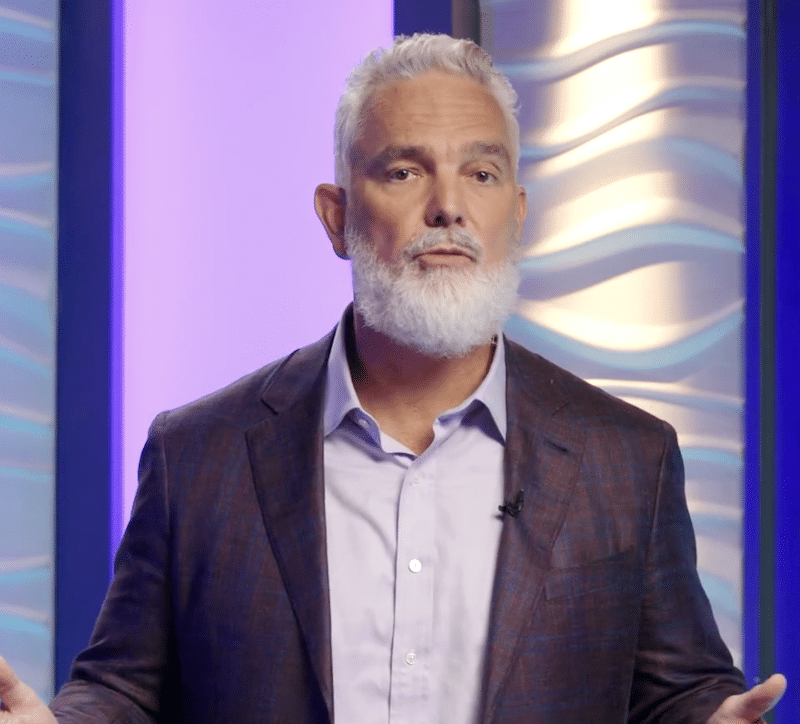
Brownstone describes him as a high-technology executive with about 25 years of experience, and much of his public positioning is built around that “insider” perspective on how major technology shifts develop.
In his presentations, Brown often points to his background at companies like Qualcomm, NXP, and Juniper Networks, and he frames his research around spotting important trends early, before they become obvious to most investors. 
His marketing usually follows a consistent pattern: he highlights a major technology breakthrough (AI, robotics, and similar themes), then explains why he believes a small number of companies could benefit disproportionately if that shift plays out.
So when you subscribe to Near Future Report, you’re essentially subscribing to Jeff Brown’s view of which technology shifts matter most, and which large-cap, high-growth companies he believes are best positioned to benefit from them.
(3) What Are Jeff Brown’s Stock Picks?
Jeff Brown’s Near Future Report stock picks are usually framed around major technology “paradigm shifts.” It embraces the idea that a small number of well-timed investments can have an outsized impact if the trend plays out. In his public presentations, Brown often points to early calls on things like Bitcoin, Nvidia, and Tesla as examples of that approach.
In practice, Near Future Report is organized more like a set of themed portfolios that express those trends through a broader list of positions.
For example, there are currently five model portfolios: AI Revolution, Precision Medicine, The Cloud, Near Future Diversifiers, and Cryptocurrency IRA. The holdings inside those portfolios tend to be established, widely followed names tied to the trend (think large-cap growth and major tech beneficiaries), plus a smaller set of diversifiers and crypto positions.
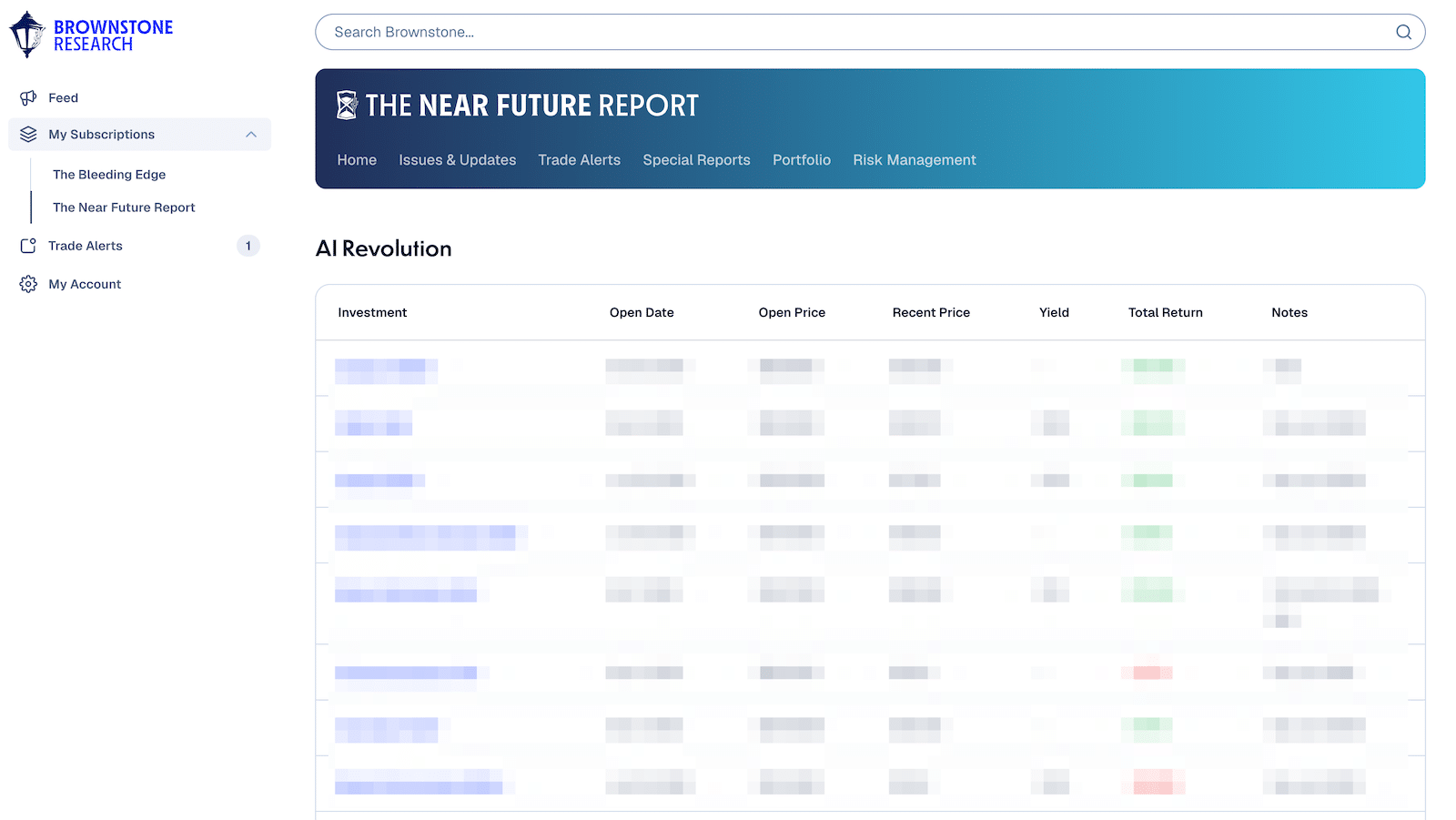
Within those portfolios, there are over two dozen active recommendations. So while the marketing often spotlights “a few” companies, the subscriber experience is typically closer to keeping up with a larger basket of positions with ongoing updates over time.
It’s also worth knowing that results are mixed within the portfolio. As of writing (Feb 2026), multiple positions are down, and some positions are down sharply, especially in higher-volatility portfolios.
Bottom line: it’s better to judge performance based on the overall basket rather than expecting every pick to be a winner. This isn’t necessarily a bad thing, but it’s worth knowing up front, because it affects how much ongoing involvement and monitoring the service realistically requires.
(4) How Much Does It Cost?
The listed price for the Near Future Report is typically around $499 per year, although it’s often discounted for new subscribers, depending on the promotion you enter through.
One important thing to know up front is the refund/guarantee terms can vary by offer. On some pages, the policy is described as no cash refunds, but rather a limited window (often around 60–90 days) where you can request credit to apply toward another Brownstone Research service. So it’s worth checking the exact terms shown at checkout so you know what you’re agreeing to.
After you join, you may also see additional services marketed to you. Brownstone offers multiple higher-tier research products beyond Near Future Report, and many of those are priced in the multi-thousand-dollar-per-year range (often around $5,000/year).
The upsells can be frequent, which is common in the investment newsletter industry. It doesn’t change what you already purchased, but it’s worth knowing up front.
(5) Is the Near Future Report Legit?
Yes, the Near Future Report is a legitimate investment newsletter published by Brownstone Research, and Jeff Brown is a real analyst with a long-running presence in the newsletter space.
That said, just because it’s legit doesn’t mean it’s the right fit for everyone. Online feedback is mixed, and the Trustpilot score for Brownstone Research is on the low side:
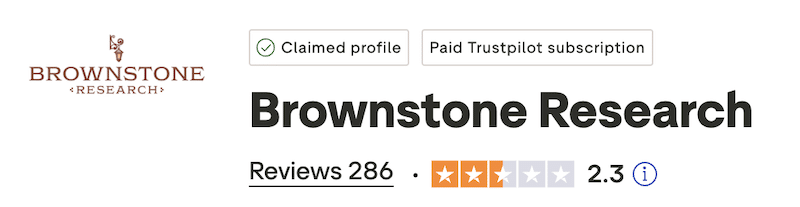
A low rating doesn’t automatically mean “scam,” but it does suggest a meaningful number of subscribers were unhappy, often for reasons like billing, customer service, or expectations not matching what they thought they were buying.
The biggest “expectations gap” is often how the Near Future Report is marketed versus how it feels to follow as a subscriber. The promotions often spotlight a few big breakthrough ideas, but in practice, you’re usually following a model portfolio with a larger set of positions and ongoing updates.
As mentioned earlier, the Near Future Report currently has over two dozen positions across five model portfolios. That can be a plus if you want broad exposure to fast-moving tech themes, but it also means more to track, more decisions, and results that depend on the overall basket of picks.
So whether it’s worth it comes down to fit. If you like big tech themes, want a steady flow of new ideas, and don’t mind monitoring a portfolio process over time, Brownstone can make sense.
However, if you prefer a more selective approach built around fewer ideas and fewer moving parts, it may not align with what you expected.
(6) Who Is the Near Future Report Best For?
The Near Future Report is best suited for self-directed investors who like the idea of investing around major technology trends, but want a structured research service to help them decide what to buy, when to buy it, and when to reassess.
If you’re comfortable tracking a portfolio of recommendations over time, reading periodic updates, and holding through the normal volatility that comes with tech-driven themes, the service can be a good fit.
But if you came in expecting just a small handful of high-conviction “main” ideas you could buy and hold with minimal upkeep, it’s worth knowing that the day-to-day experience requires ongoing monitoring.
In that case, you may be better served by something more selective and lower-maintenance, where you’re mainly following a smaller number of high-conviction ideas rather than monitoring a broader bench of positions.
Is There a Better Alternative?
I’ve reviewed hundreds of stock advisories over the years, and what I’ve found is that while many make bold claims, the actual experience after you join doesn’t always live up to the hype.
That’s why I focus on analysts with a proven track record.
One analyst whose work has stood the test of time is Dr. Mark Skousen.
Skousen is a veteran economist, bestselling author, and former CIA analyst who has spent more than four decades helping readers identify major trends and under-the-radar investment opportunities before the crowd catches on.
Right now, he’s focused on a little-known stock trading around $5 that recently signed a major six-year supply deal with Tesla.
In his latest presentation, Skousen explains why this story could be bigger than most investors realize, and why he personally bought 10,000 shares.
You can watch the full presentation here: