
WallStreetZen is one of the most polished stock-research platforms I’ve used. The data is excellent, the interface is clean, and their quant-driven “Zen Ratings” system is really cool.
That said, after spending some time in the members’ area, it becomes very clear that WallStreetZen is a research tool, not an investing service.
You’re given watchlists, ratings, upgrades, downgrades, and dozens of stock lists… but no clear guidance on what to buy, why, or how to build a portfolio that can beat the market.
If you’re a DIY analyst who enjoys digging through lots of data, it’s impressive.
But if you’re a regular investor who wants straightforward, high-conviction stock ideas, it quickly becomes overwhelming.
On any given day, there are over 900 “buy-rated” stocks, so there’s simply no way for the average investor to narrow that down to the small handful that actually deserve a place in your portfolio.
If you’re looking for something more straightforward — a service that gives you clear, high-conviction stock ideas backed by a proven process — I’ll show you a better option after the review.
See My Top-Rated AlternativeWhat You Actually Get Inside WallStreetZen
WallStreetZen’s sales page makes the service sound straightforward: a powerful quant model, top analyst insights, and high-upside stocks you can quickly identify.
They highlight their Zen Ratings system heavily. According to their data, the top “A-rated” stocks have averaged +32.52% annual returns since 2003 — enough to turn a $10,000 investment into more than $6 million over time.
Those are impressive numbers.
But when you join, what you actually get is a research platform, not a curated list of high-conviction ideas.
You’re dropped into a dashboard full of categories, links, and stock lists — with no clear sense of what to look at first or which pages actually matter.
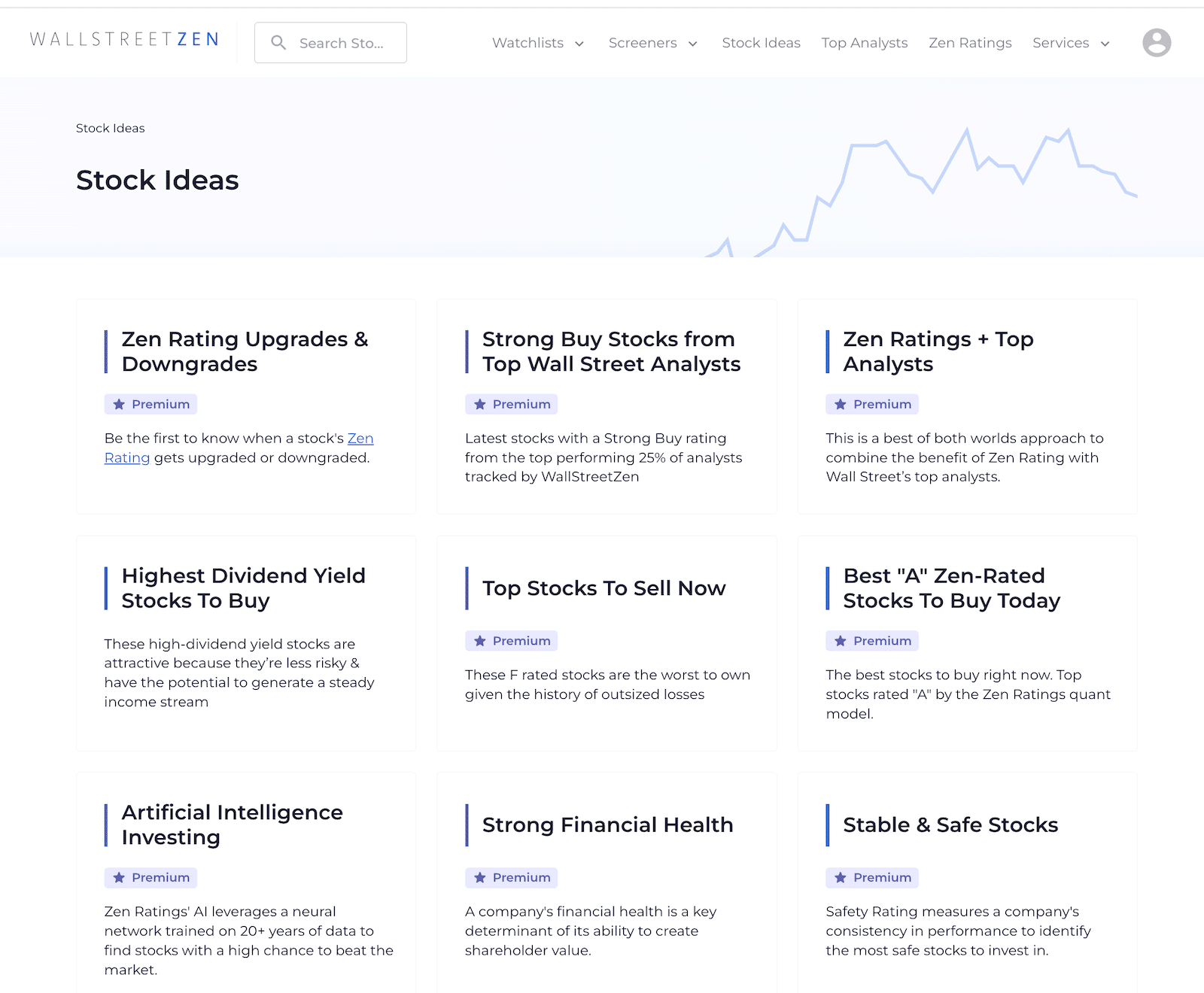
Everywhere you click, you’re met with more lists, more indicators, more filters, and more ratings. It’s impressive if you already think like a professional analyst… but overwhelming if you’re an everyday investor trying to make smart decisions without spending hours glued to your computer each day.
And when you go deeper into the Zen Ratings system, the complexity ramps up even more. You can easily end up staring at pages of A-rated stocks, each with conflicting grades across ten different categories — without any guidance on which ones actually deserve a place in your portfolio.
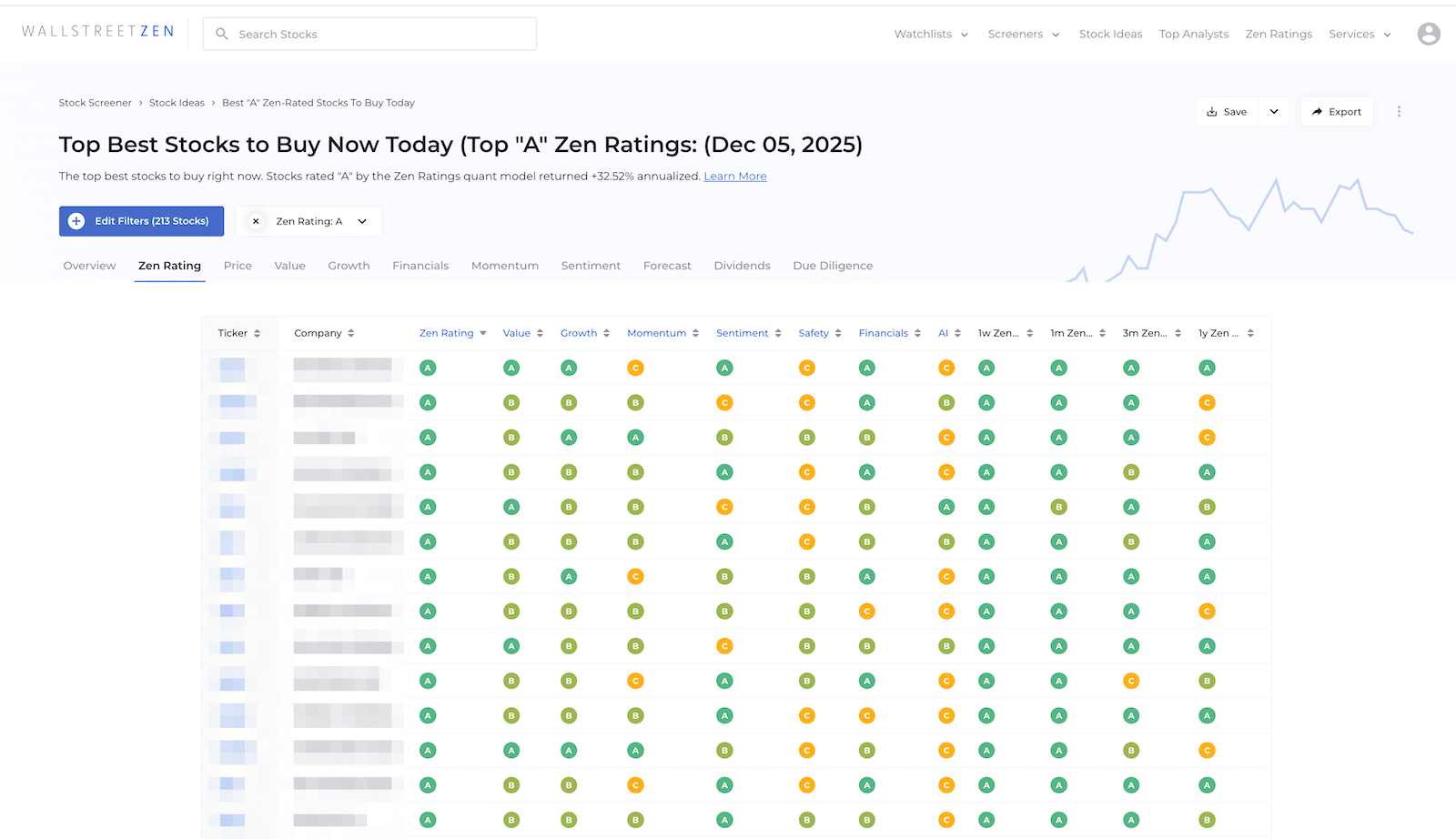
WallStreetZen clearly puts a lot of work into gathering and presenting high-quality data. The challenge is that the platform leaves you to interpret everything on your own.
Can the Zen Ratings and Top Analyst Picks Help You Find Winning Stocks?
Zen Ratings and the Top Analyst picks are the two features WallStreetZen promotes the most. In theory, they make it easier to spot high-upside stocks without digging through endless financial reports.
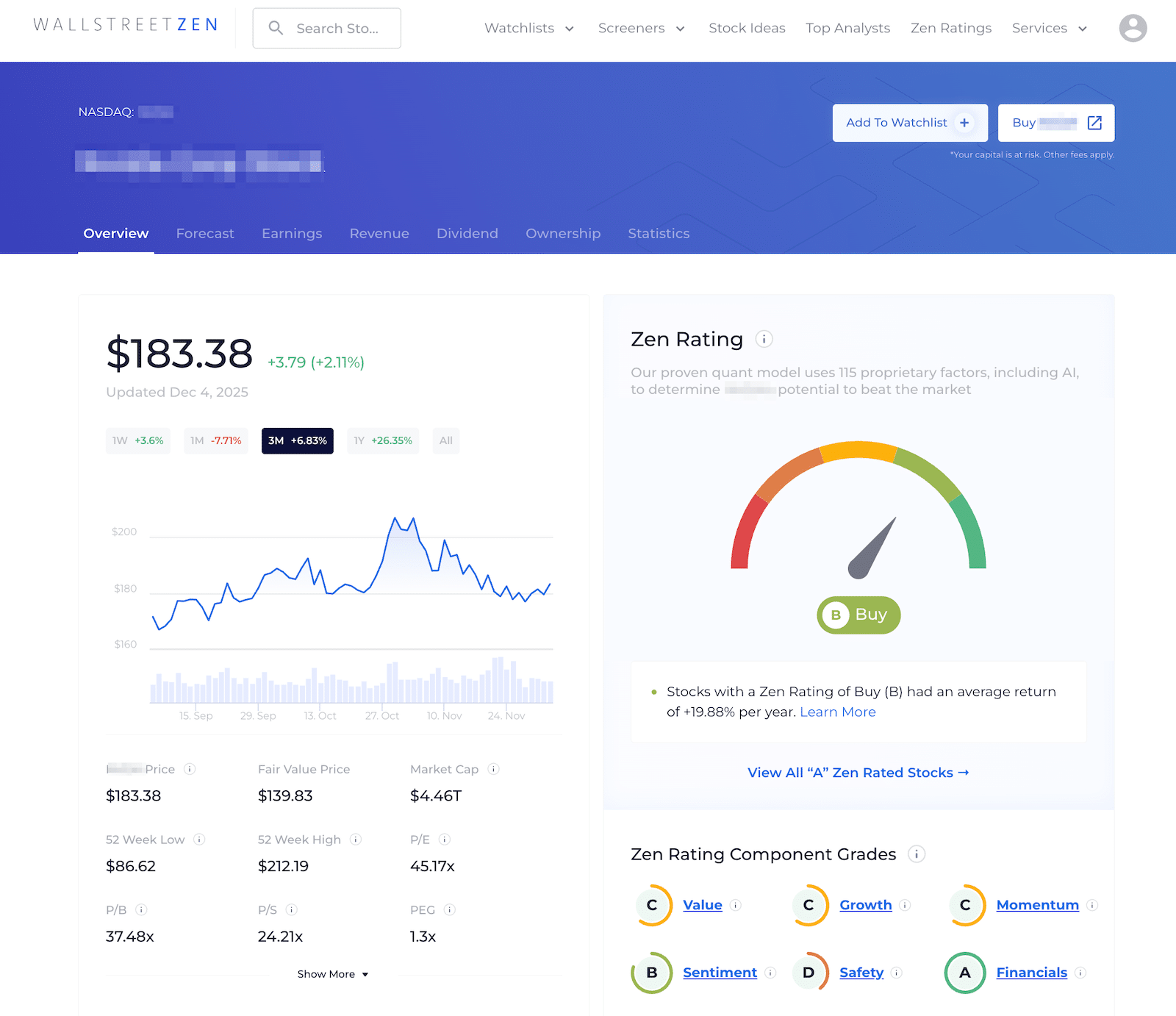
Zen Ratings takes 115 factors and condenses them into a simple A–F grade for each stock. You can type in a ticker and immediately see how it scores across value, growth, momentum, sentiment, financials, and more.
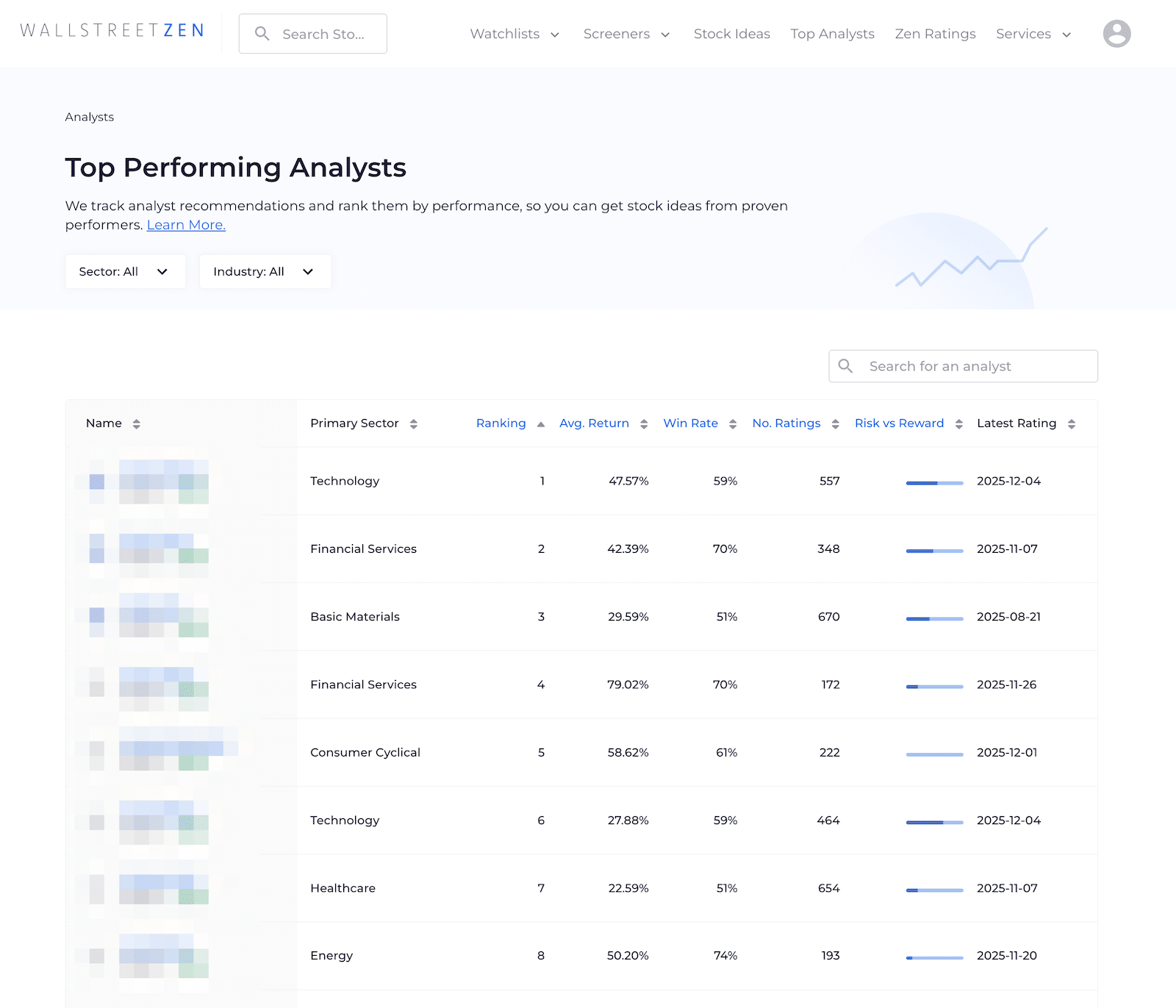
The Top Analysts tool tracks thousands of Wall Street analysts and highlights recommendations from the ones who have historically outperformed the market.
The idea is that you get the best of both worlds:
A powerful quant model + insights from proven analysts.
There is definitely useful information in both tools.
The challenge is piecing it together into something actionable.
Zen Ratings can surface hundreds of A- or B-rated stocks — each for completely different reasons — without explaining which ones truly deserve priority or how long the signal should matter.
And when you layer analyst ratings on top, you often get mixed signals: a stock Zen Ratings likes may not be favored by top analysts, and vice-versa.
Both tools provide helpful inputs.
But neither one gives everyday investors the clear, expert-filtered direction they usually want — the kind that tells you which stock to buy, which to avoid, and why.
Who WallStreetZen Is Actually Good For
WallStreetZen is best suited for investors who enjoy digging through data and making their own decisions. If you like comparing factor grades, testing different screeners, and analyzing what drives a stock’s rating, there’s a lot here to work with.
It’s also a good fit for people who already have experience evaluating stocks and simply want a faster way to access high-quality data in one place.
The platform does a great job of organizing fundamentals, analyst insights, and performance metrics without you needing to pull them from multiple sources.
But if you’re looking for a service that narrows things down for you — one that highlights a small number of high-conviction ideas and explains exactly why they matter — WallStreetZen isn’t designed for that. To get the most out of it, you essentially need to think like an analyst yourself and have the time to interpret all the information the platform provides.
Should You Join WallStreetZen?
WallStreetZen is a high-quality research tool. The data is solid, the interface is clean, and the Zen Ratings system can be genuinely useful if you already know how to evaluate stocks and want a faster way to analyze them.
But for most everyday investors, the main limitation remains the same:
WallStreetZen gives you inputs, not guidance.
You can see ratings, factor grades, analyst opinions, upgrades, downgrades, and dozens of stock lists — but you’re still left to interpret it all yourself.
The platform doesn’t narrow things down to a handful of high-conviction ideas, and it doesn’t explain why one A-rated stock stands out more than another.
If your goal is to become your own analyst and you enjoy spending time comparing data, it may be worth exploring. But if you’re looking for a service that tells you what to buy, why it matters, and how to build a portfolio around it, there are better options to consider.
The Kind of Opportunity Algorithms Can’t Identify
Most investors spend their time reacting to whatever looks strong right now — a stock flashing an A-rating, trending on a chart, or showing up near the top of a screener.
But that approach often misses the real wealth builders.
Some of the greatest long-term winners — companies like Nvidia, Netflix, and Apple — spent years looking volatile, misunderstood, or even “unattractive” to quantitative models. Their biggest upside wasn’t obvious through factor grades or short-term signals.
The investors who caught them early weren’t following algorithms.
They were following business quality, long-term trends, and a clear investment thesis — the kind of thinking that only comes from experience, not data points.
That’s the real gap in tools like WallStreetZen:
They can surface interesting stocks, but they can’t tell you which ones have the long-term potential to become the next major winners.
Finding those kinds of opportunities doesn’t require hundreds of ratings or complex filters.
It requires clarity, conviction, and guidance from people who’ve spent decades studying how great businesses grow.
If that’s the approach you prefer, there’s a presentation I strongly recommend watching.
It features Bill O’Reilly and Alexander Green — a veteran investor with a 20-year track record of identifying major winners long before they hit the mainstream. In it, he reveals his top 3 AI stocks for 2026 and explains why each could thrive as America pushes to lead the next wave of AI innovation.
If you want clearer guidance on where the real opportunities are in today’s market, this presentation is well worth your time.
You can watch it here:

Bottom Line
WallStreetZen is a well-built research platform with excellent data, a clean interface, and tools that can genuinely help you analyze stocks more efficiently. If you enjoy digging through numbers and forming your own conclusions, it’s one of the better options out there.
But if your goal is to find a small number of high-conviction opportunities — the kind of ideas that come from deep research and real-world experience — WallStreetZen doesn’t bridge that gap. It gives you powerful inputs, not a focused plan.
For investors who prefer clarity over complexity, I recommend watching this interview featuring the analyst I personally follow.